


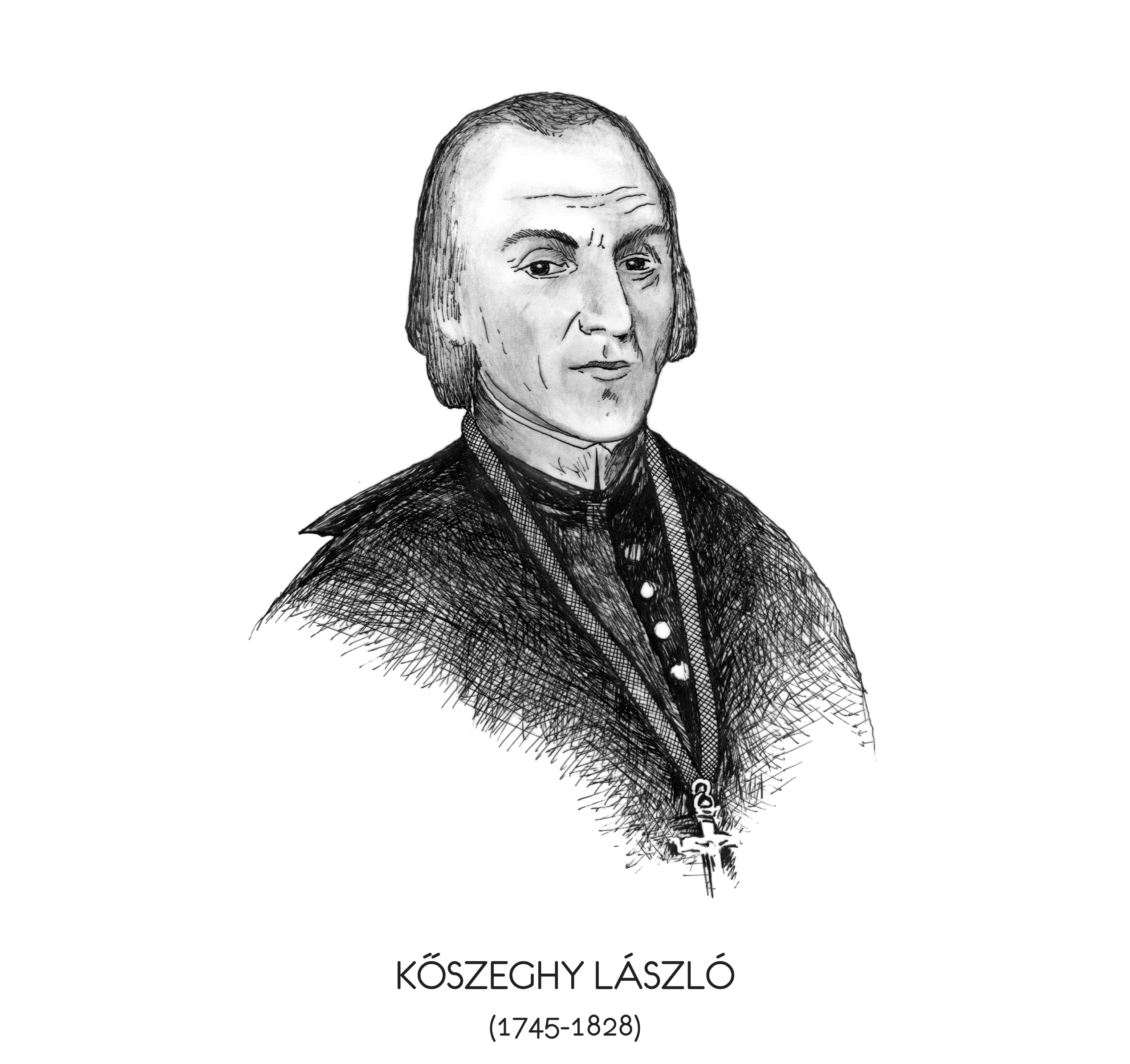
 Erudite bishop, Jesuit teacher, noble man and landlord.
Kőszeghy László was born in Szeged-Felsőváros. He started his studies in a Piarist school in Szeged, then he studied philosophy at a university in Buda. In 1765 entered the Jesuit Society. He was a Jesuit with classical education, and was teaching in Jesuit schools; his superiors wanted him to become a university professor. He was a novice in Trencsén (1765-67), teaching in Nagybánya (today Baia Mare, Romania), (1767-69), in Gyöngyös (1769-1770), in Buda (1770-1771), in Graz (1771-1772) and in Pécs (1772-1773). In 1773 when the Jesuite order was dissolved he had not ben ordered yet. Then he went to Graz to study theology. He was ordered here, in Graz where he was conferred the Doctor’s degree in 1776.
He had background knowledge, he was perseverant, very organized and hard working. From Graz he returned to Pécs to teach, and in 1777 followed the newly appointed bishop of Csanád Temesvár (today Cenad, Romania) back to Temesvár (today Timişoara, Romania).
The bishop appointed Kőszeghy canon, secretary and vicar general. Since the bishop was ill, it was Kőszeghy in charge of the diocese and run it in a very strict way. In December 1798 Christovich died, and with the help of the vicar chapter, Kőszeghy stayed in charge of the episcopate of Csanád. After one year, on 24 April, 1803 he was appointed bishop. His ordination took place in the Jesuit church that had been restored by Kőszeghy himself. In April 24, 1803 he consecrated the dome in Temesvár built in the memory of martyr Saint George and also the cathedral of his diocese.
On the territories that had been re-occupied from the Turks only 50 years before, the local administration was not very efficient, the church treasury was empty. He managed the estate of the church carefully, he demanded strictly the tenth, the taxes from the pub owners and also the compulsory works to be done. He made sure that the priests would get their salaries. He managed to get the estates of Ság, Parác and Sztancsova (the fields and forests), and he strengthened the financial situation of the diocese. He spent all his time in the capital town of the diocese, visited its churches, and controlled the credits of the diocese and the preparedness of its priests. There was a shortage of priests, so he decided to bring young priests from Szeged to the villages of Banat.
In Temesvár in the one store building behind the Sain George Church he started the first school of the town, the Seminary of Temesvár. The seminary institute was financed from the funds of the diocese. He controlled in person the performance of the students, he visited the schools in the region very often and with pleasure.
He did some changes regarding the Chapel of Csanád, he provided him a decoration and his canons represented his chapter in the Parliament in Pozsony (today Bratislava, Slovakia) and in the county councils. He founded archdeaconries, and he expected reports from its archdeacons. He founded a pension office for the old priests, and a retirement fund (Deficientiae Fundus) in Temesvár. He built a summer residence for bishops and a decorative chapel in Makó. Outside Temesvár he built a summer residence for bishops in Majorok. He went there often himself.
In 1808 in Csanád he ordered a column to be raised exactly where the cathedral of Csanád was. He was very concerned about his extensive family’s well-being, and he provided a good position in the society for each of them. His younger brother, József was abbot and later he becomes the head of the seminary. He was also concerned about Judit’s well-being. Judit was the daughter of his younger brother. Her house in Temesvár was visited not only by the influent politicians but also by the bishop. His family was given noble title and the name of „Remetei”. In 1808 he was conferred the title of inner councillor.
His writings about his predecessors were published in Latin, German and Hungarian. After a long life during which he worked hard he was buried in the dome of Temesvár.
